
Keanu Yokoyama
Creative technologist. Audio programmer. Recording engineer. Portland, OR.
status: open to work

Pixel Drift explores the space between pixels and their connection to the analog world we live in. I invite you to come be part of that journey.
You can interact with the piece by scanning a QR code in the exhibit window, which opens two experiences: a generative-AI tool for building your own environments, and a website where you can drop virtual objects into the installation's shared visual field or curate a look from a dropdown that the physical display then renders. I built the TouchDesigner side of the piece — everything driving the visuals and hardware — while an in-house web developer built the website experience.
The entire display is bound by a strict limit of 12,887,068 pixels, constantly randomized and recycled to manifest new objects — visitors nicknamed it the "galaxy soup." This digital ecosystem visualizes the beauty of constraints, ultimately exploring the endless opportunities that are all around us.
The piece runs across a deliberately cascading chain of pixel density, showing how the same content "translates" across different display technologies: 6 TVs at the top end, 20 LED tiles, 72 ePix addressable pixel-strip fixtures, and 4 CuePix DMX panels at just 4×4 pixels each — all driven from a single TouchDesigner system.
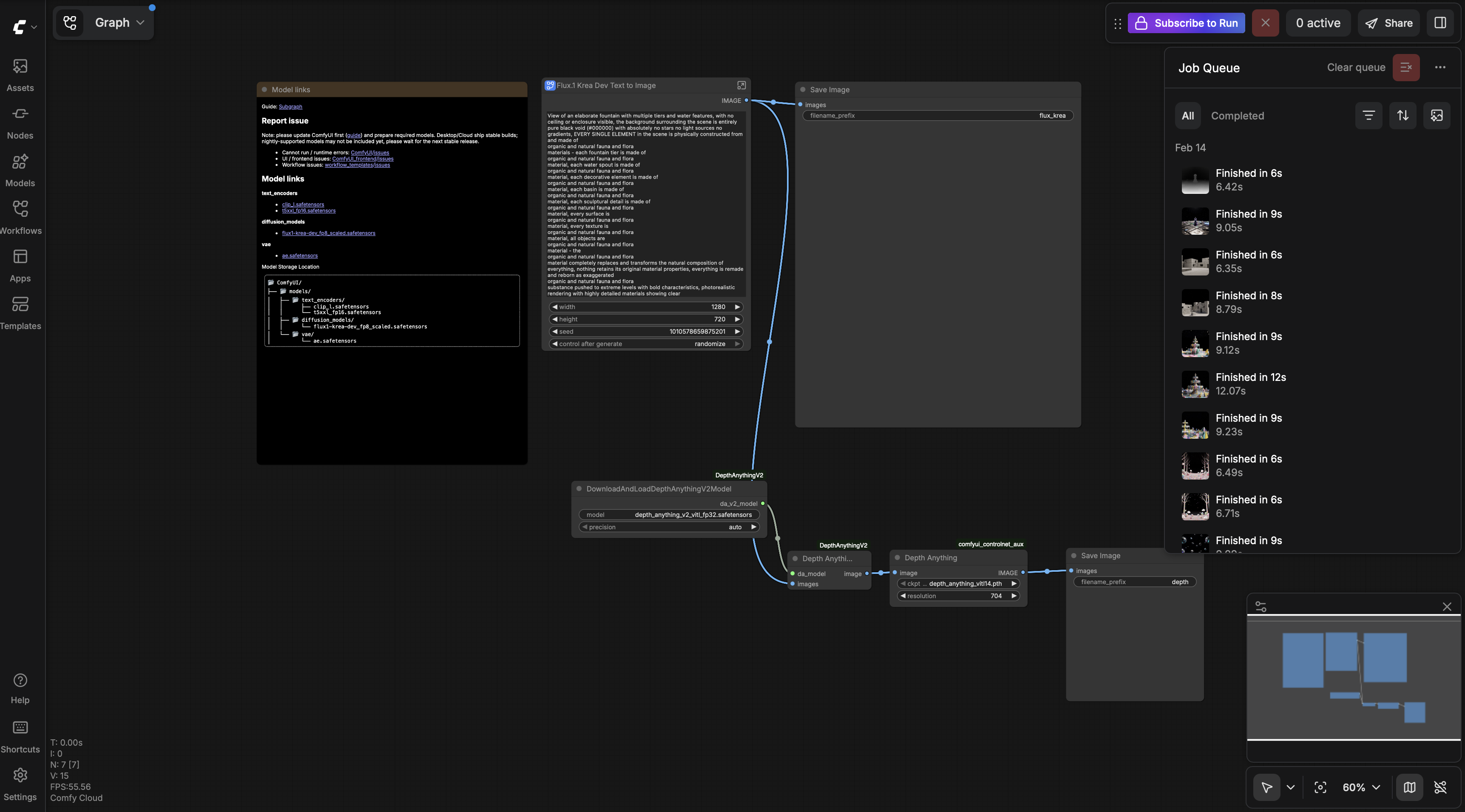
Under the hood, TouchDesigner is the hub everything routes through, with ComfyCloud running FLUX.1 for AI image generation, MediaPipe for audience person-detection, and a mix of Socket.IO and OSC handling the Q&A interaction and hardware communication. One of the harder problems I solved was a bug where polling and downloading from ComfyCloud inside TouchDesigner would freeze its main thread — the fix was moving that process out to an external Python script that talks to TouchDesigner over OSC instead.
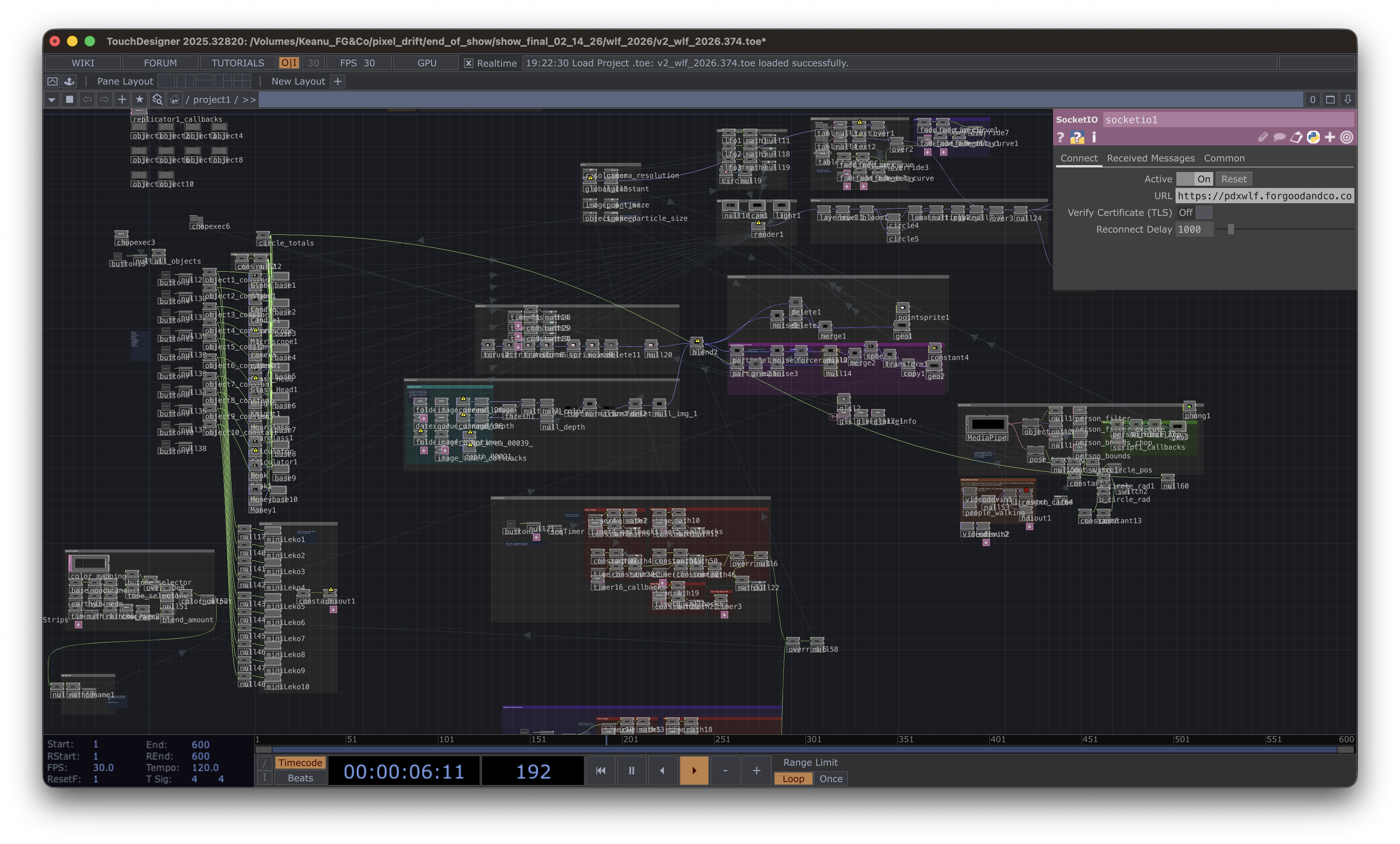
TouchDesigner was the cornerstone of this piece and was used to program the environments and their interaction.
Comfy UI was used to pipe AI images from the Flux Krea model into TouchDesigner.

In a world where external expectations and internal inspirations leave us in limbo, I created Equilibrium — an interactive light installation that explores that balance. Using human-powered action to impact the environment, the piece invites viewers to contemplate the coexistence of contrasting forces and to find the calm in between.

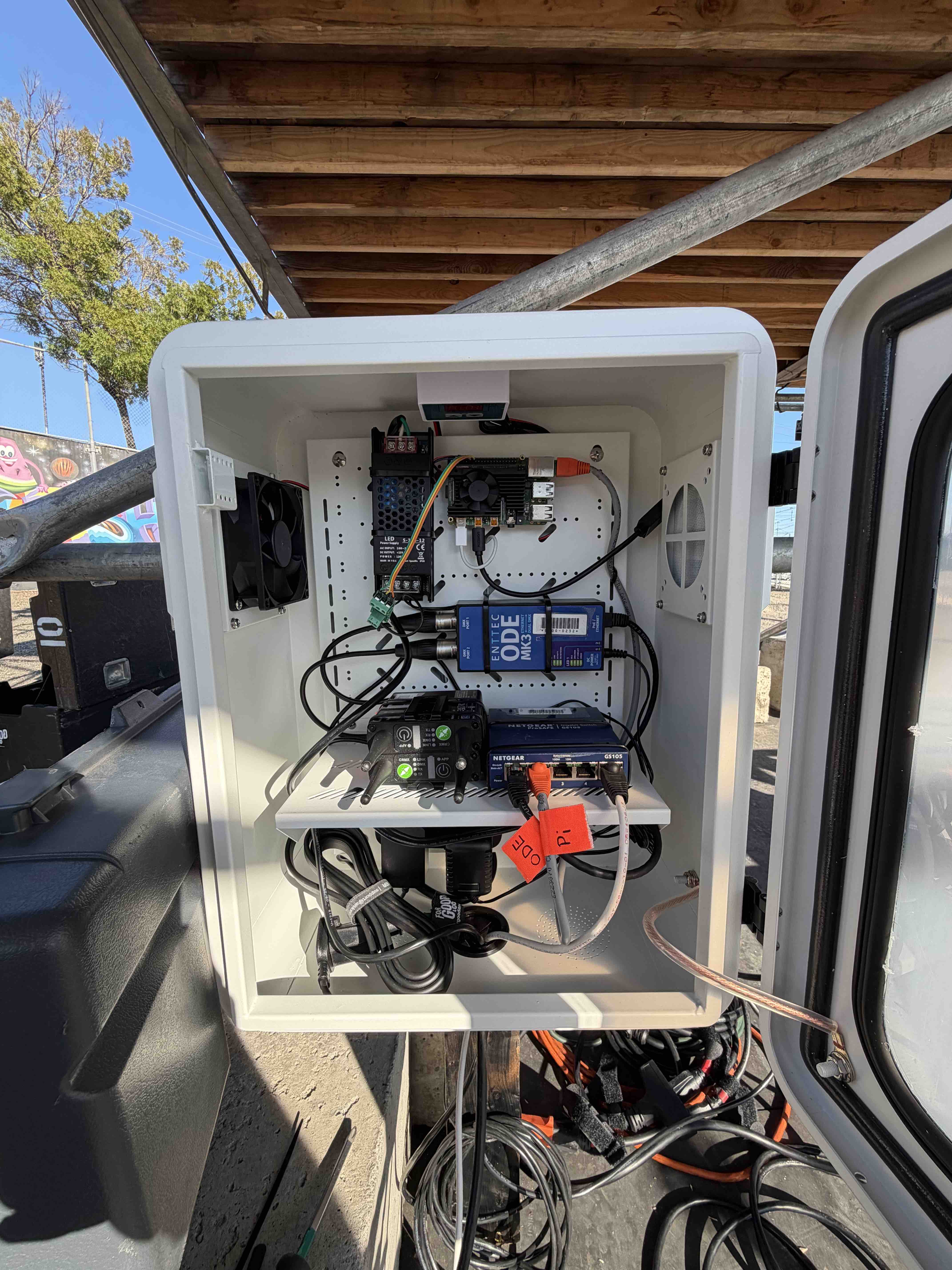
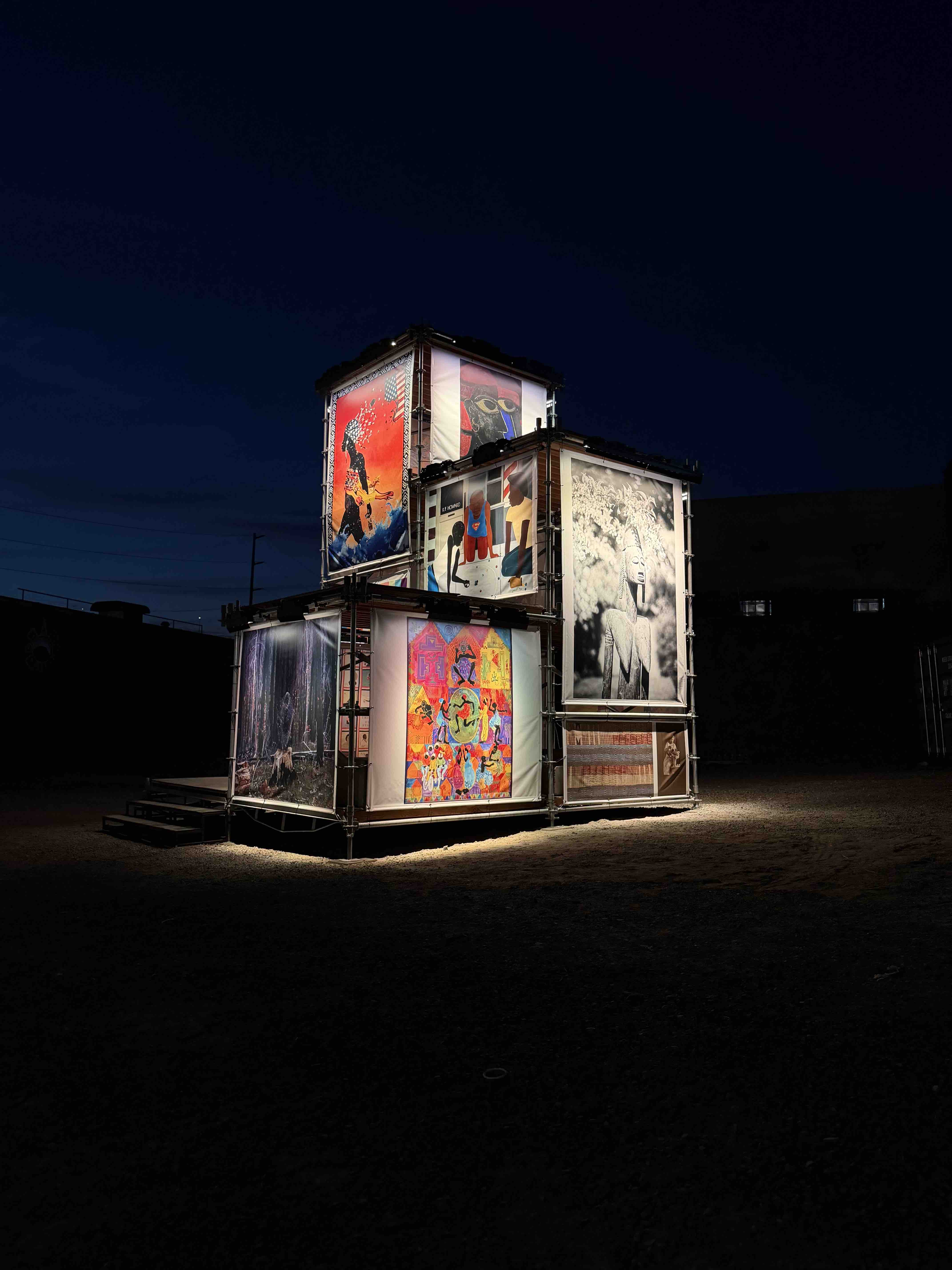
For this project, I worked with For Good & Company to help the 1803 Fund bring a sculpture and park to life. To highlight the artwork on the sculpture, I coded custom DMX and daylight-sensor logic running on a Raspberry Pi.

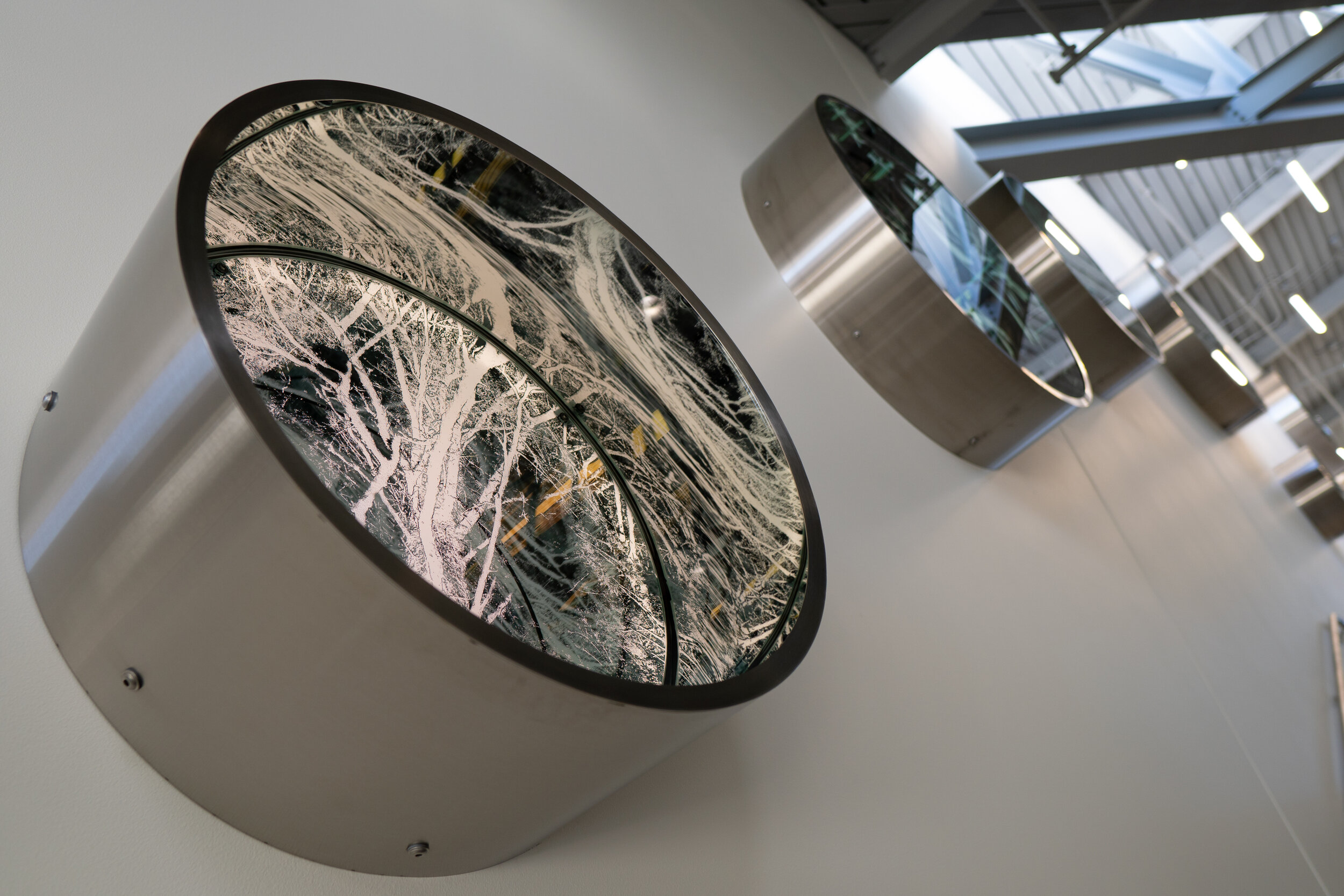
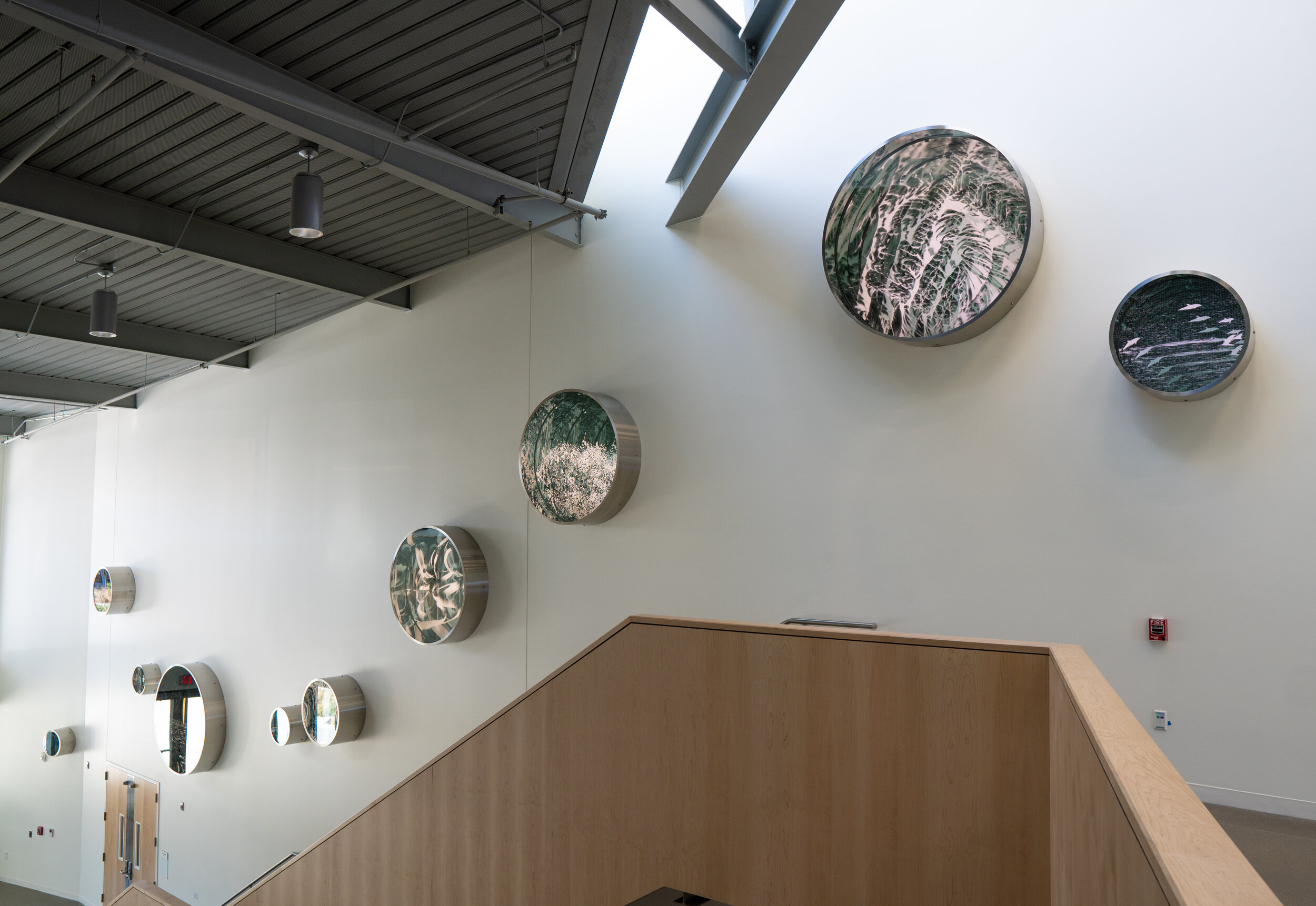
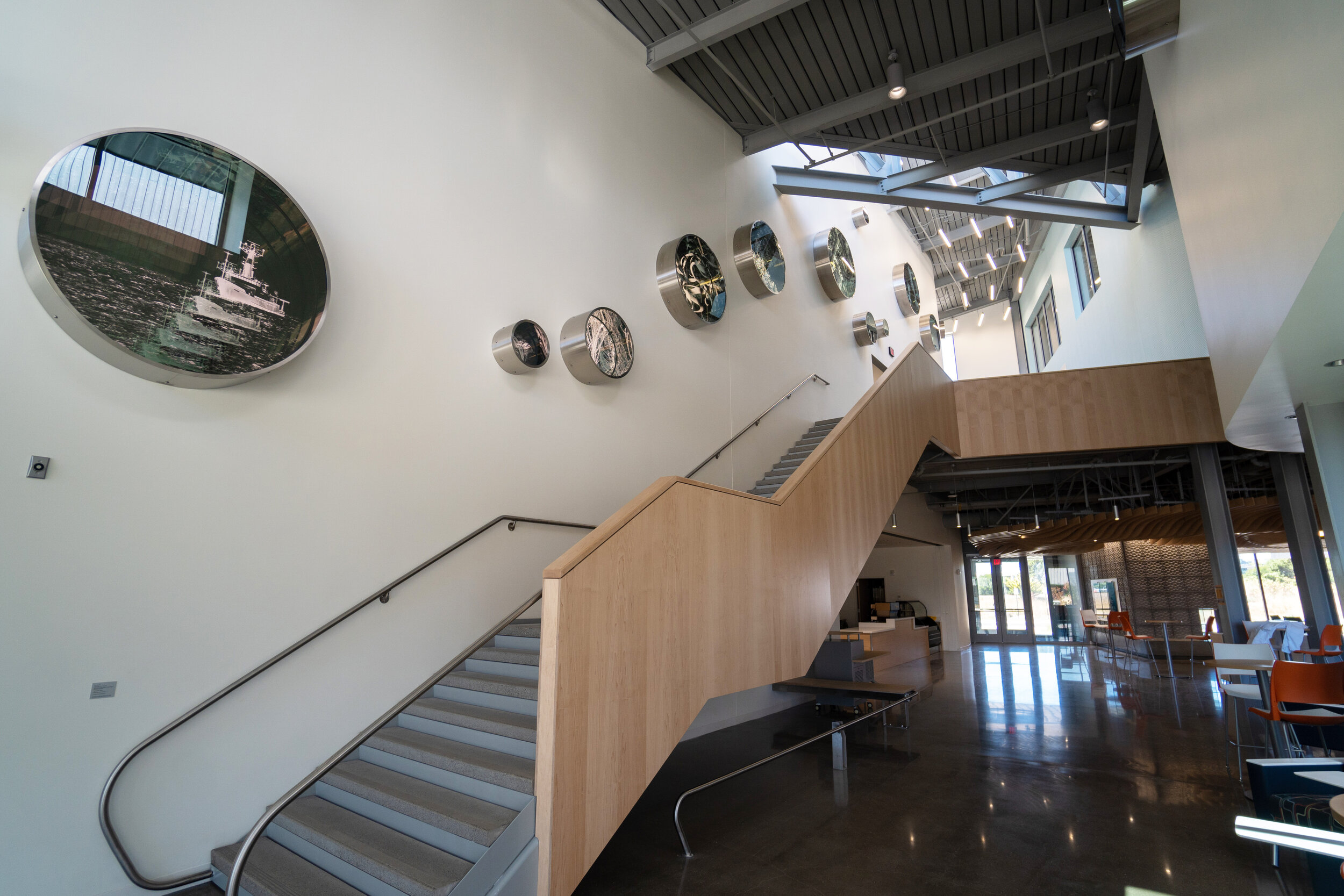
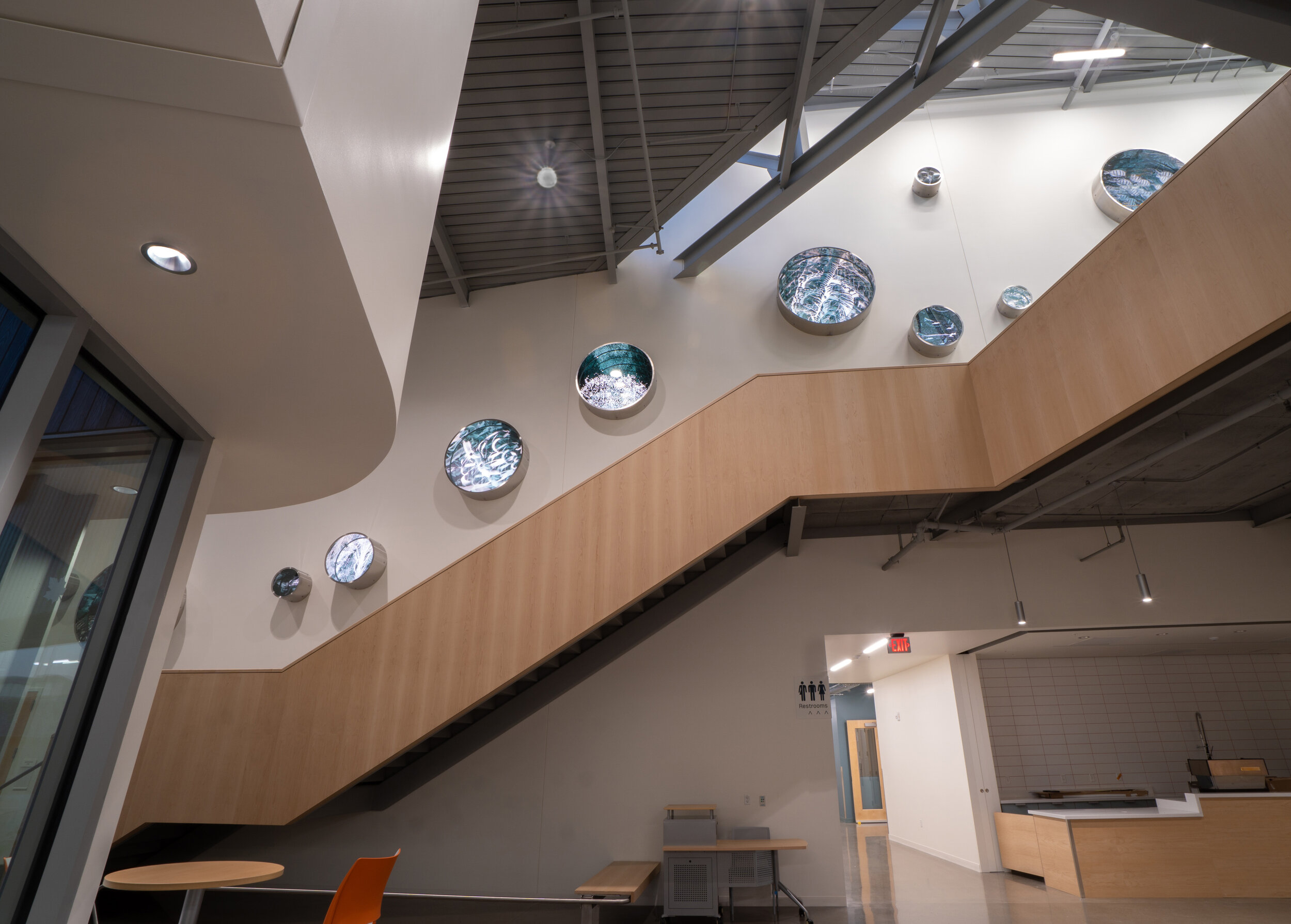
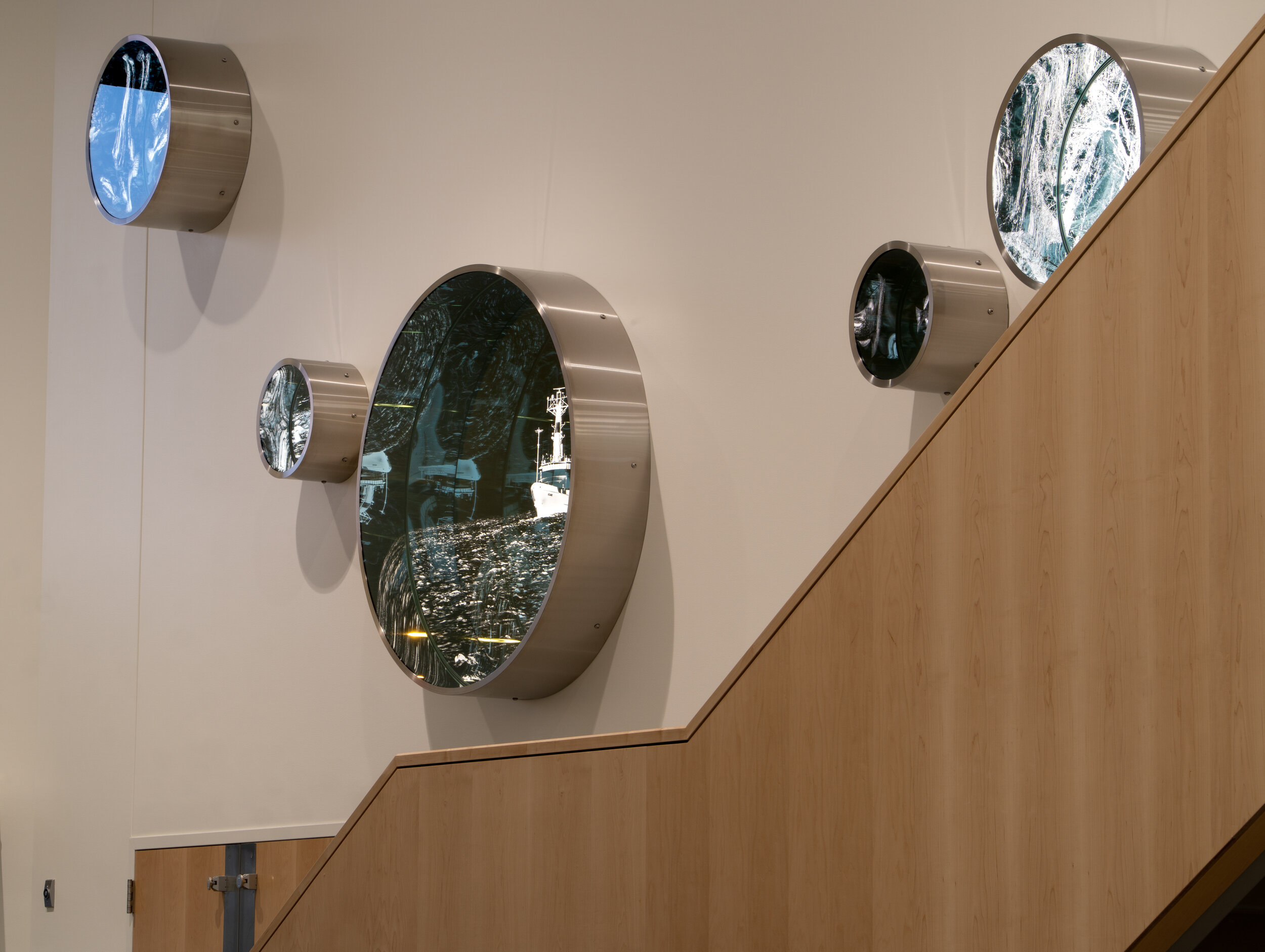
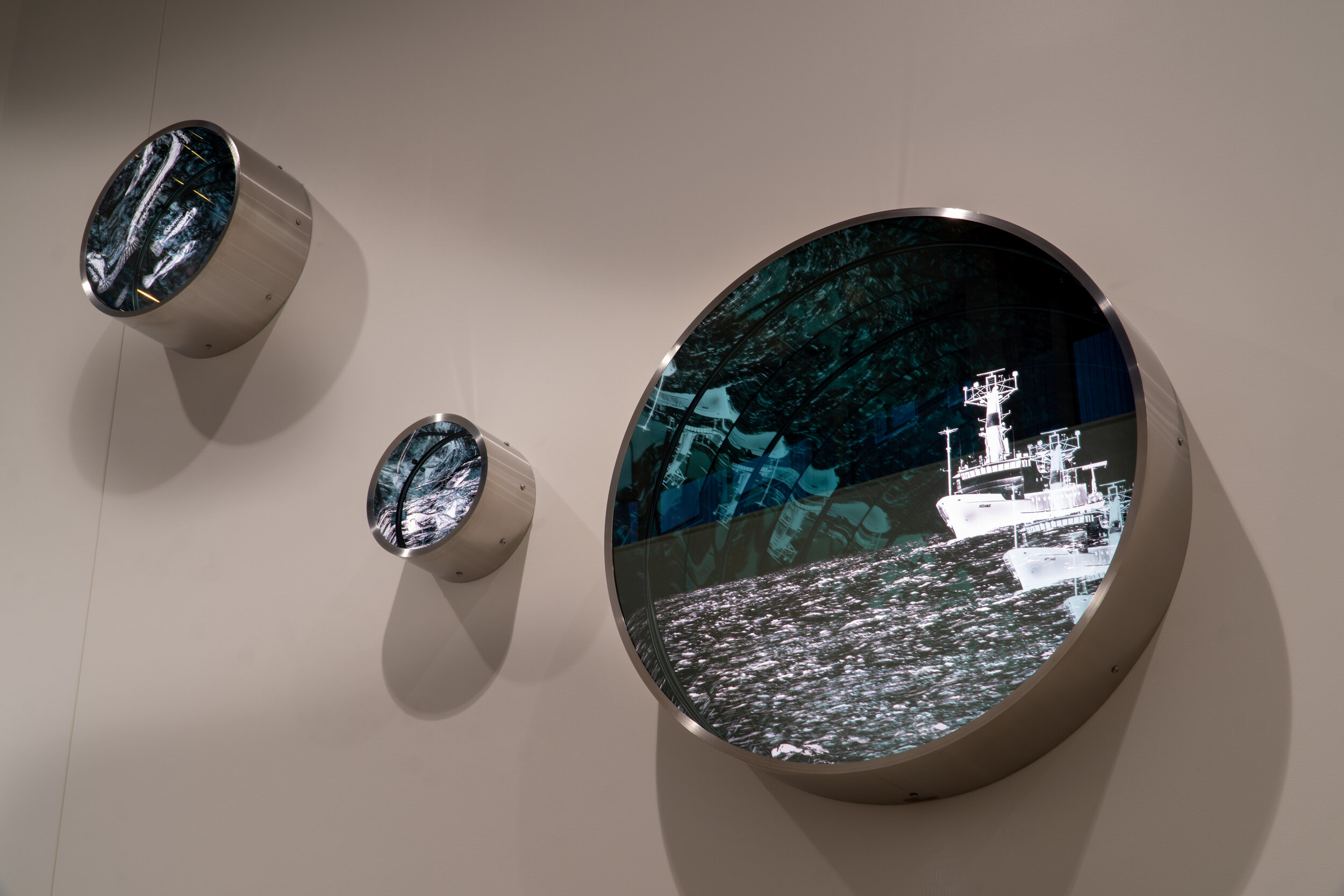
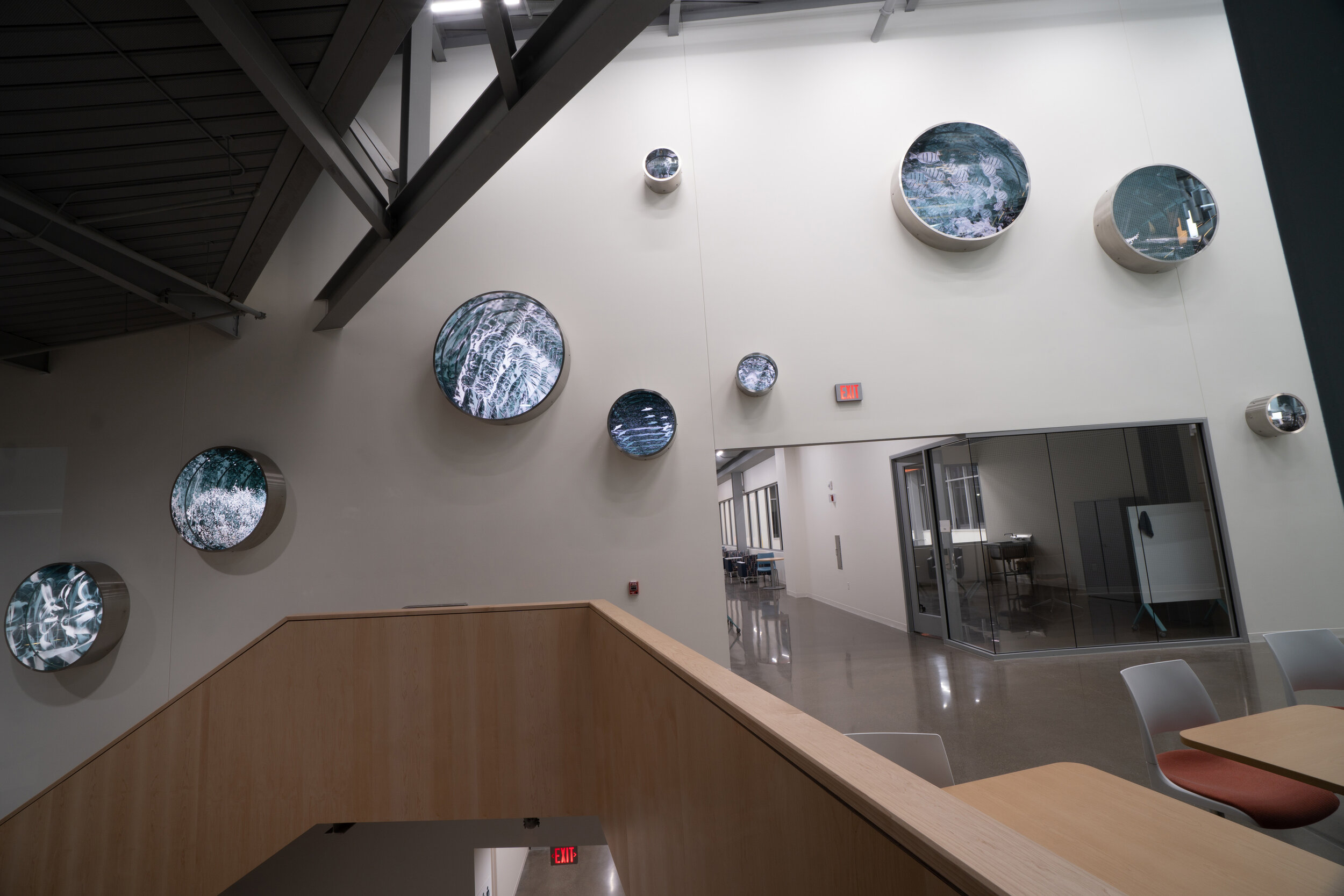
This Is Water is a piece commissioned by the Oregon Arts Commission and Oregon State University, for OSU's Marine Science Institute. I collaborated with Parallel Studio and Site Specific Work to create this visual art and audio piece. The audio was sourced by community members, who were given a recording cheatsheet and handheld field recorders. They went out and collected sounds that represented water, which we compiled and transformed into a piece that phases between two major themes: humanity and nature. The audio contains elements found both beneath the water and on land around Newport, Oregon.
This composition can be heard emanating from custom-made vitrines throughout OSU's Marine Science Studies Building, phasing seamlessly between one another throughout the halls.
My specific role in this collaboration was to create a recording cheatsheet that was user-friendly for any level of participant, and to source adequate recording equipment for them to use. I also built a sound delivery system that fit inside the vitrines by sourcing amps, speakers, and playback devices, then consolidated and mixed the field recordings into three separate but integrated pieces.
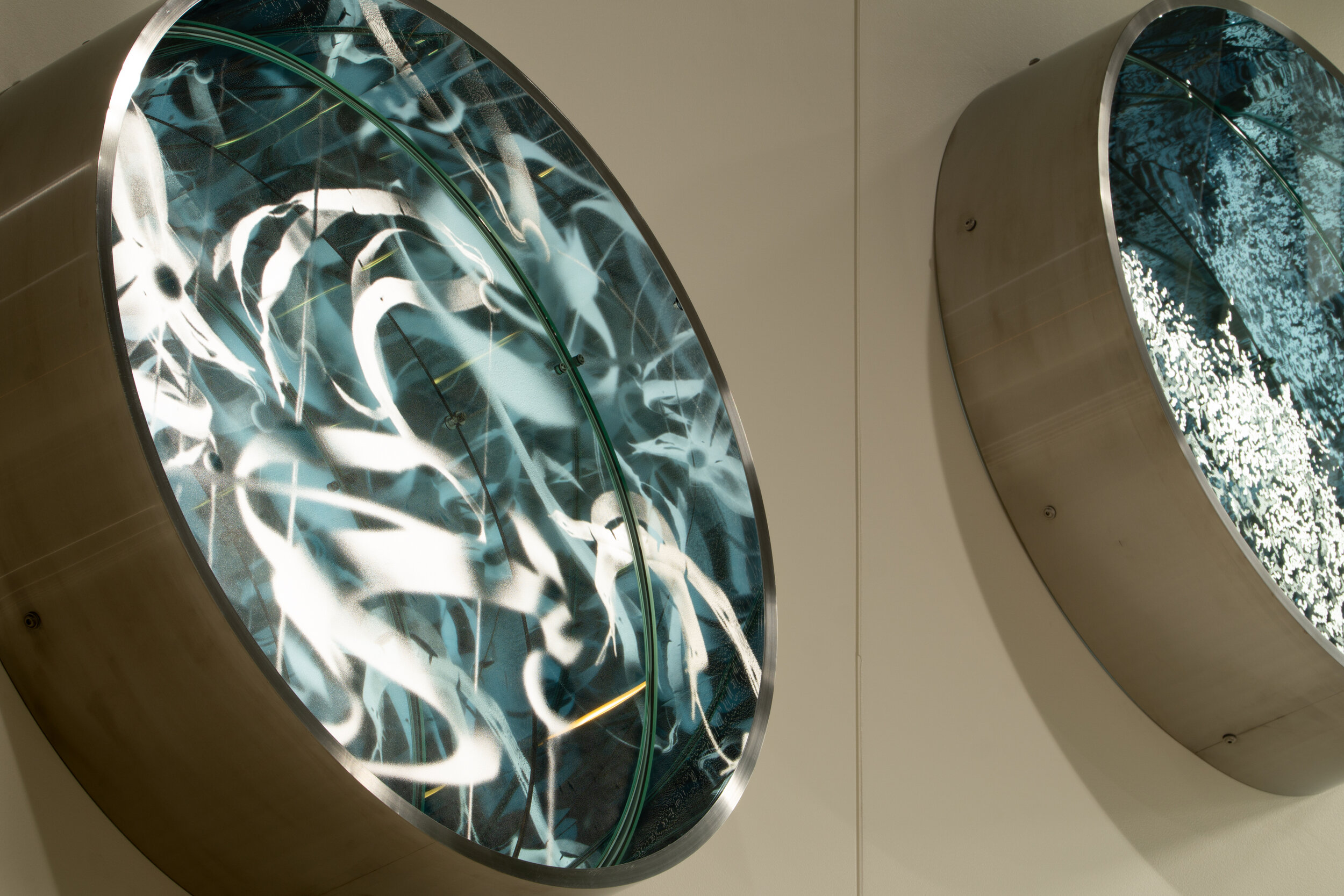
Photos thanks to Site Specific and Oregon State University http://www.sitespecificwork.com/this-is-water/ https://hmsc.oregonstate.edu
Through Parallel Studios, I was tasked with creating a program that would place audio throughout a speaker array set up in the Mills Galaxy dome.
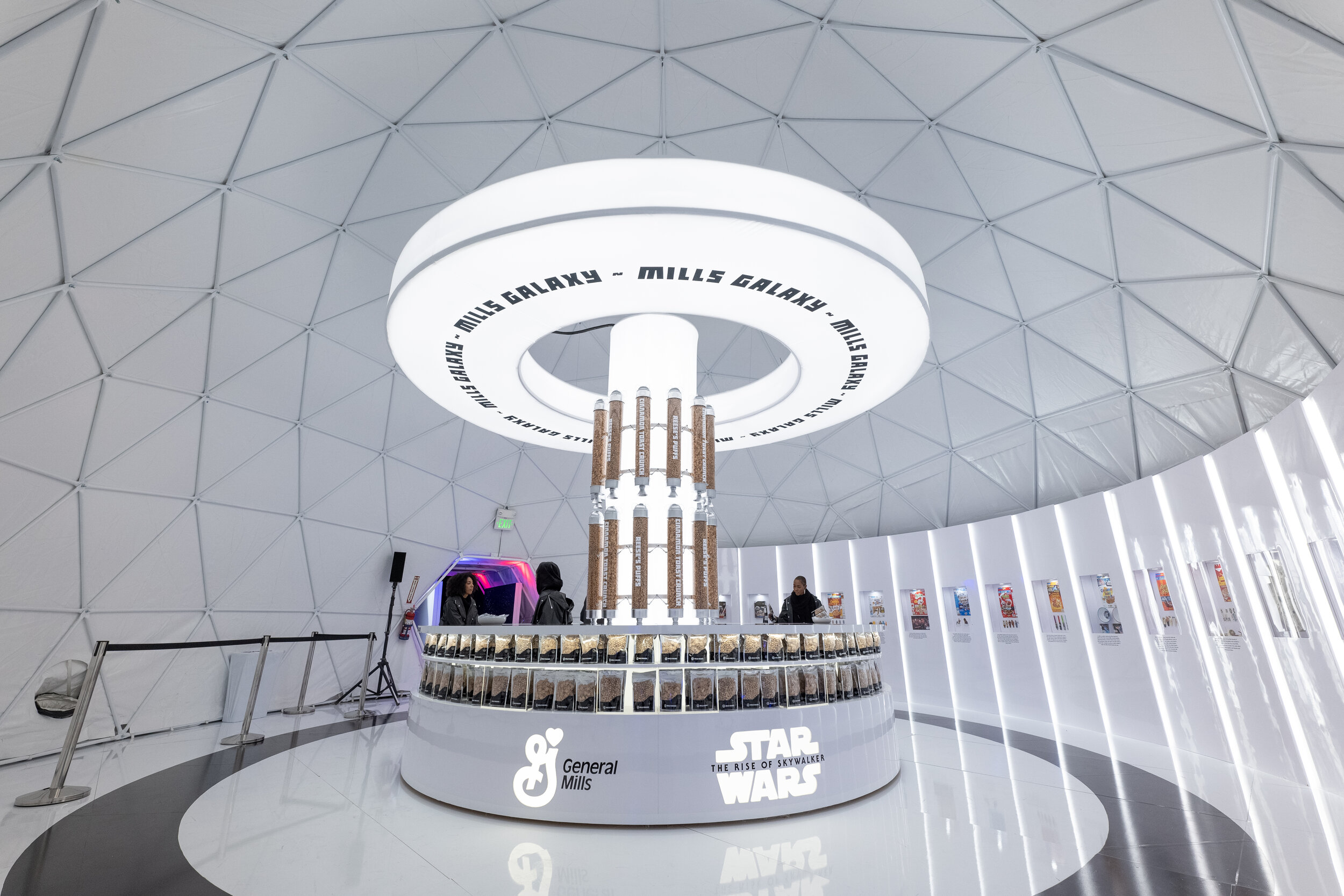
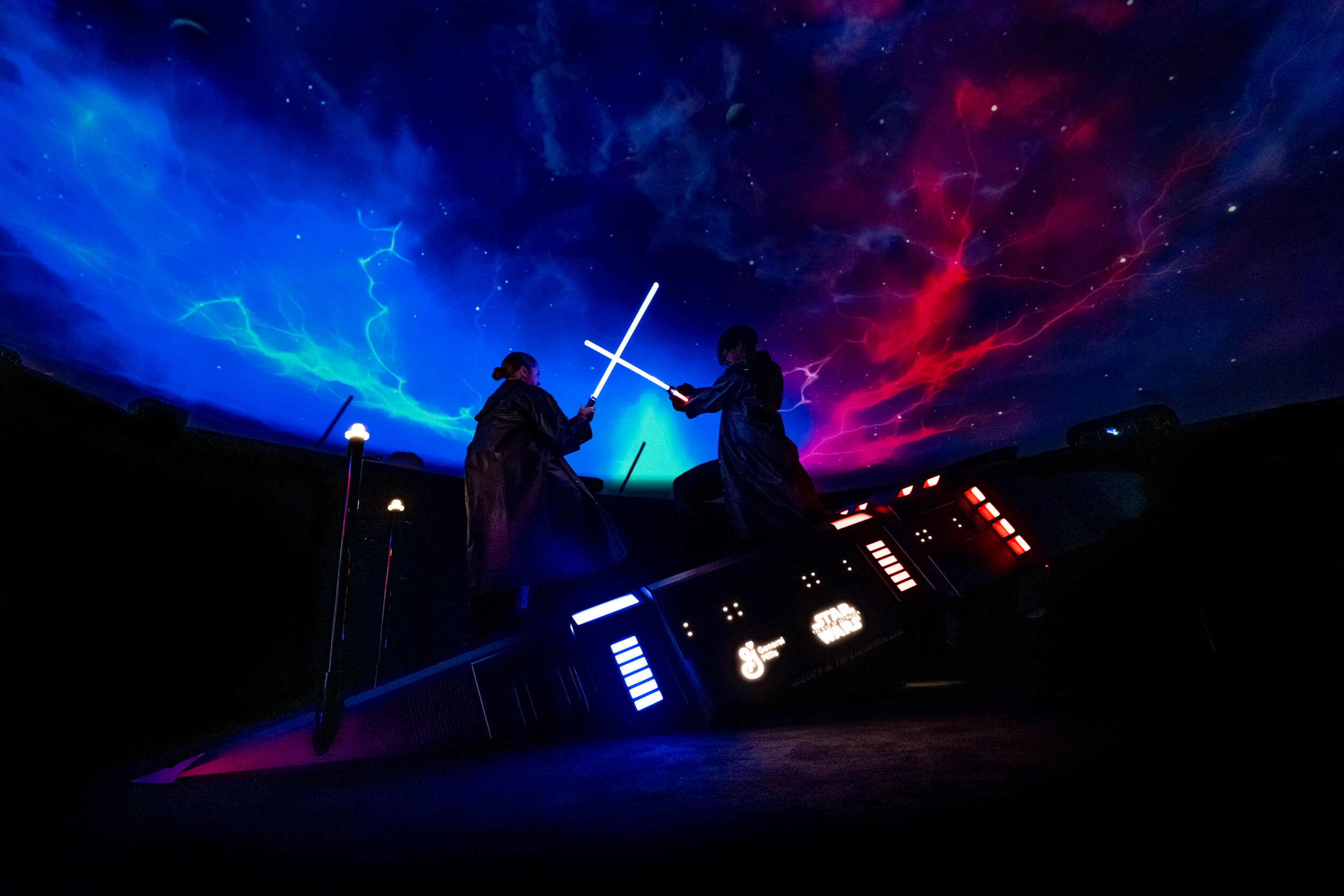
Photos and Video thanks to General Mills and IDL https://idlww.com/work/mills-galaxy/

Nike Infinity React was an experience created for the release of Nike's Infinity React line. The Nike 650 store in New York was transformed into a personalized gear-fitting experience.
I designed custom audio to give customers an interactive experience unique to the product launch, working with Parallel Studio and using Pure Data to program audio placement and behavior throughout the space.

Nike's Lebron shoe release included an experience where a participant could dunk on a basketball court while an array of cameras captured a multi-angle video/GIF of the moment. Parallel Studios brought me on to create a program that placed audio throughout the Nike retail space and court, and to build some of the hardware needed — including a custom 3D-printed "countdown" button enclosure with electronics that triggered an audio and visual countdown sequence leading up to the multi-angle capture.
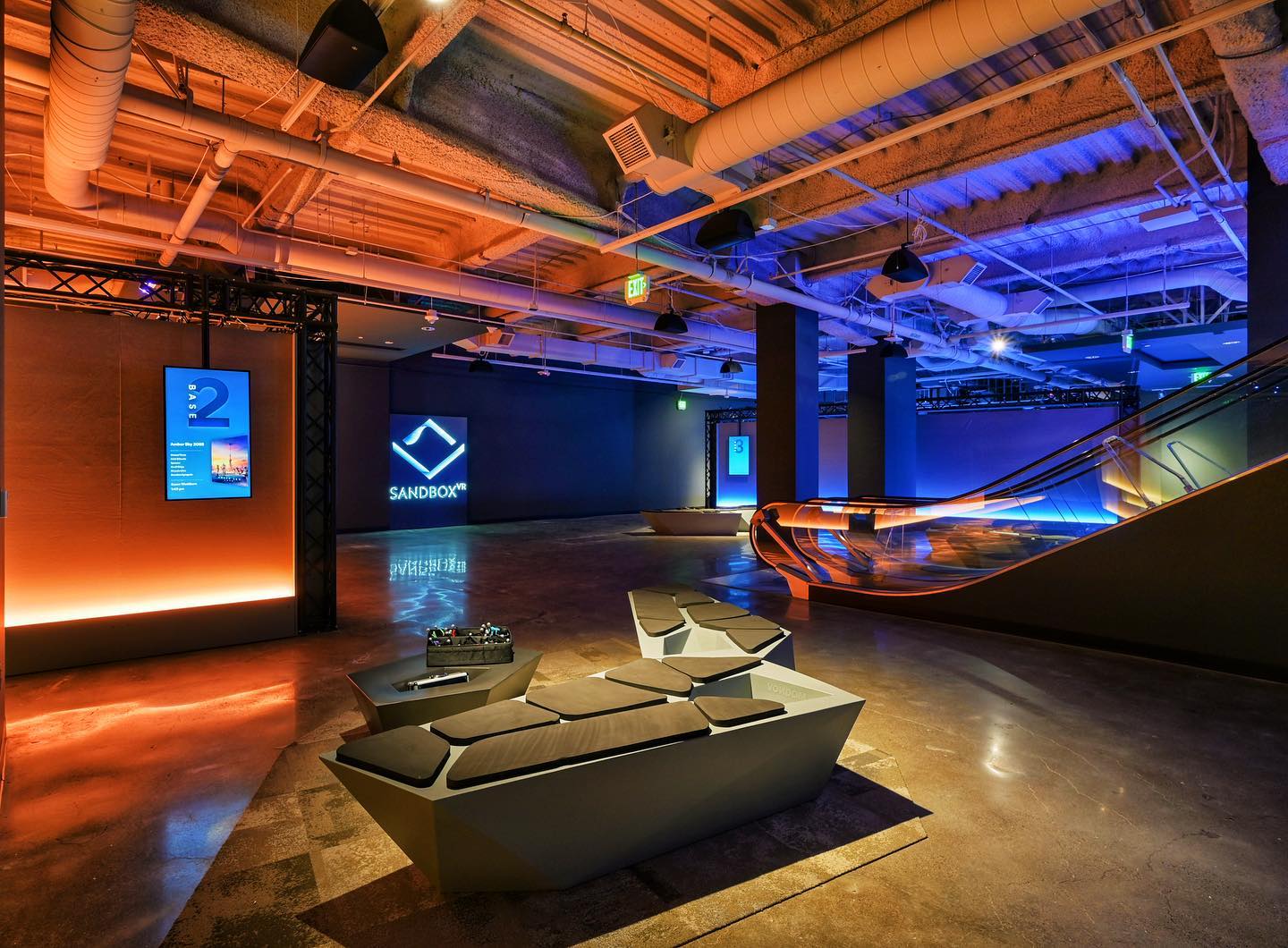
For Sandbox VR's San Francisco location, Parallel Studio tasked me with programming custom software that could send and receive OSC (Open Sound Control) triggers to control audio and light animations throughout the building. The software also streams a playlist for the lobby, environmental sounds, custom pink noise for the play areas, and highly articulated panned sounds for the speaker array surrounding the escalator. I visited the worksite to install a custom audio computer rack and sound system for the entire building.
Photo and video thanks to Sandbox VR sandboxvr.com

Nike San Francisco features a "tunnel" escalator that brings customers from the ground-level entrance into the retail space. The tunnel has custom audio panning stages you experience throughout the ride: it opens with "abstract" audio built from musical elements, moves into sports audio like squeaking basketball shoes and a dribbling ball, and finishes with the audio transforming into a cheering crowd as you enter the retail space.
To help conceptualize this experience early on, Parallel Studios had me create a virtual experience where designers could scrub through the space and audio, or simply ride the escalator and hear exactly what the final installation would sound like.

Habitat Sounds is a product that maps a large array of ceiling-mounted speakers to sounds recorded in nature, generatively mixed and rearranged into a seamless soundscape that immerses you in the outdoors.
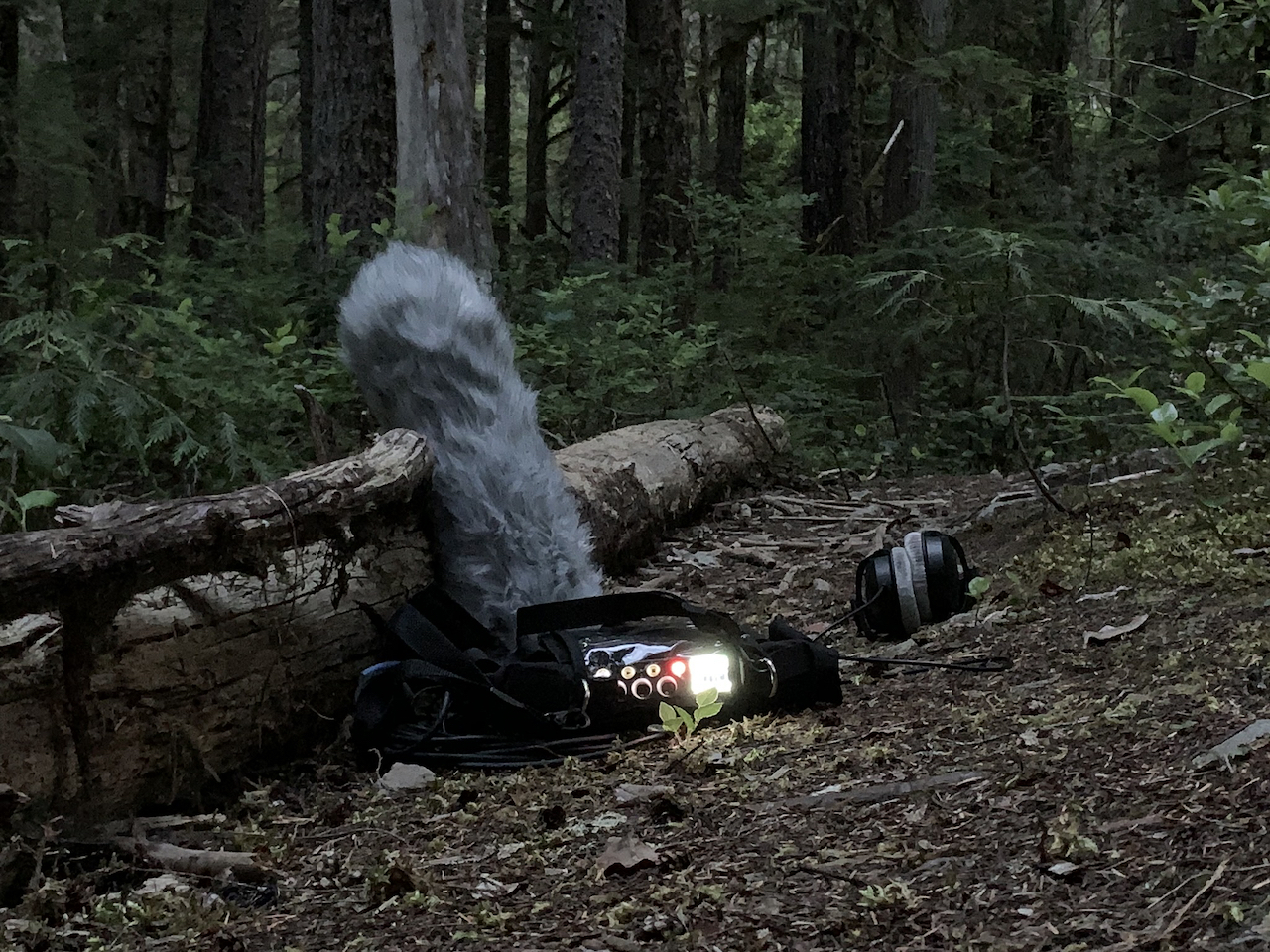
For this project, I spent several days and nights in the Oregon wilderness capturing sounds of nature, from intricate water trickles and rushes to the dawn chorus. I recorded with an eight-microphone array placed in a grid pattern spanning over 300 square feet, a mobile shotgun microphone for specific sounds, and binaural microphones to help create the feeling of being in nature.

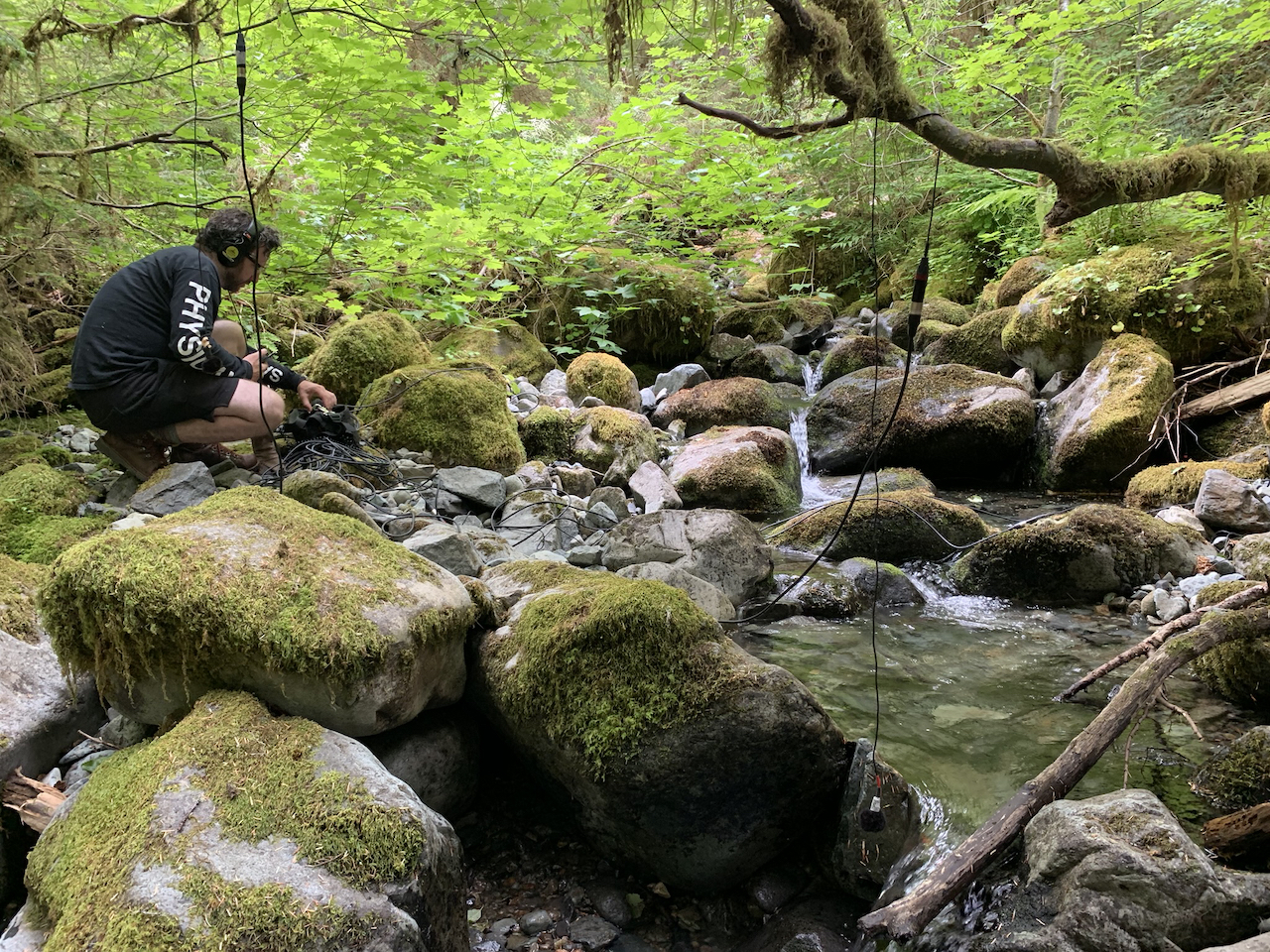
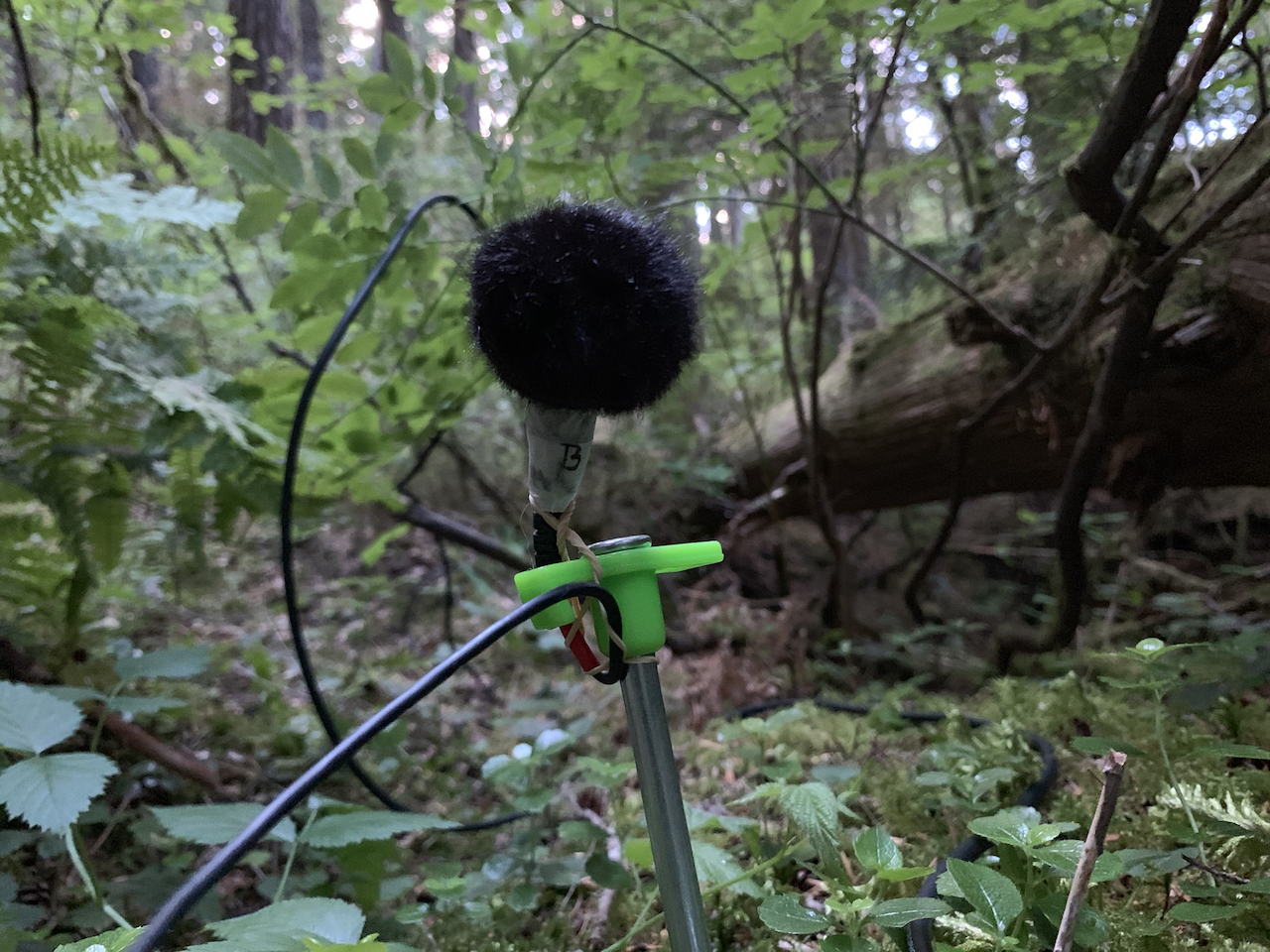

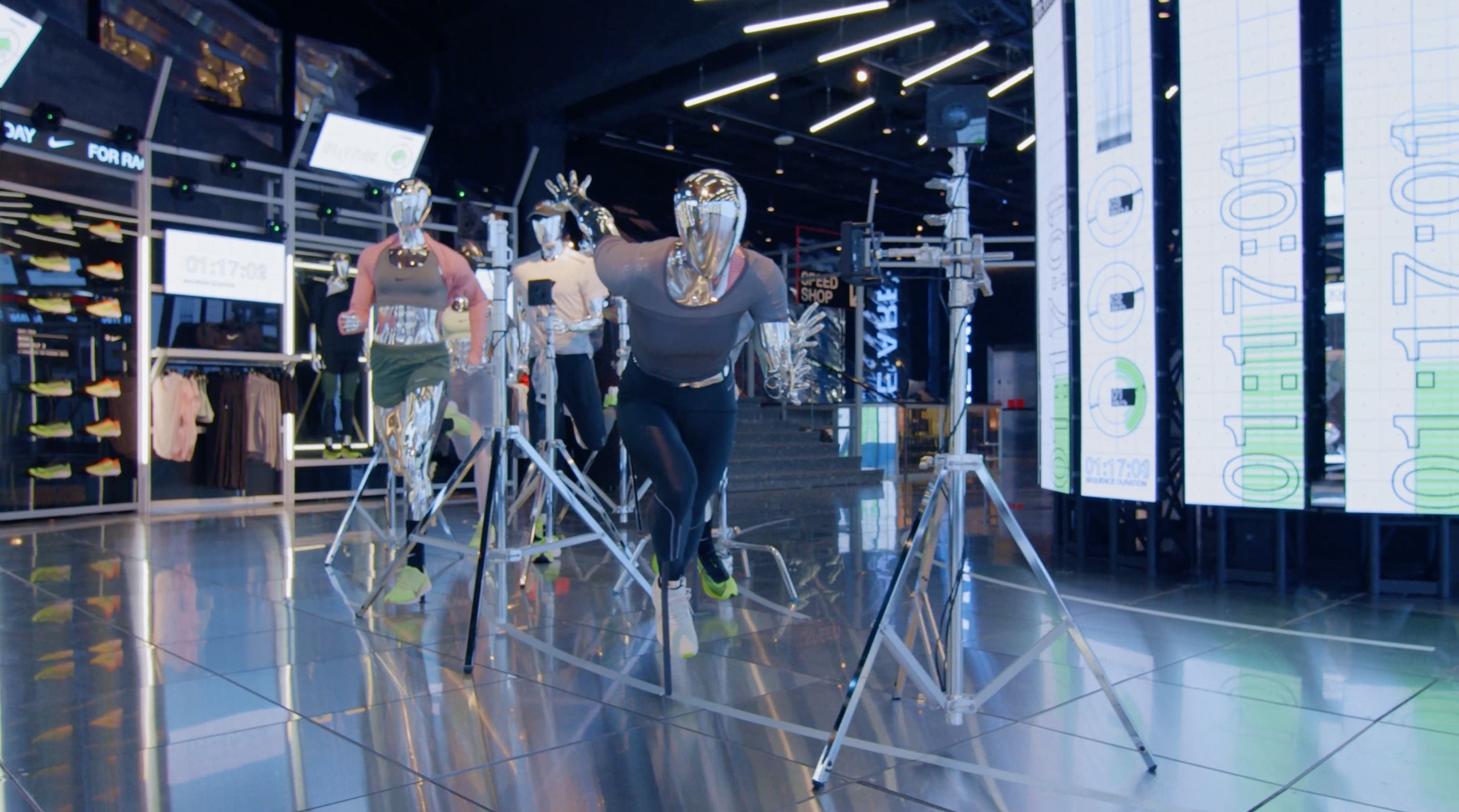
For Nike's Zoom launch, Parallel Studio had me create a panning program that directed audio from the house speakers to the "centrifuge," where it swirled around an audio-visual pillar placed in the middle of the room.

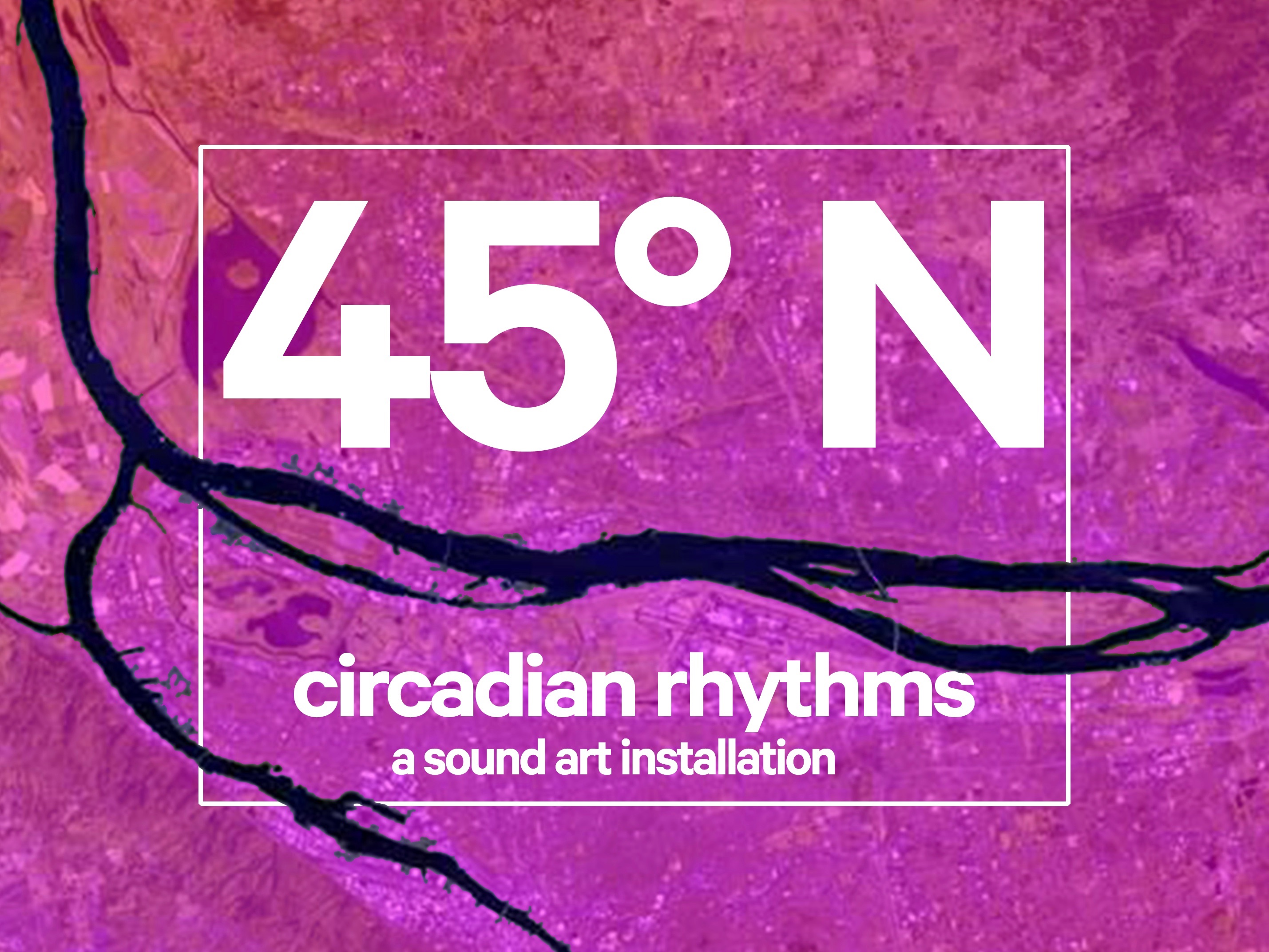
The Portland State University Sonic Arts and Music Production program explores the natural cycle of circadian rhythms within the urban bustle of Portland with their visual and audio art installation, 45°N: Circadian Rhythms. Each student used a combination of field recording, synthesis, and other forms of audio editing to represent the soundscape for the location in an emotional and literal sense. To give the listener a more immersive experience, they developed a visual representation of their location with lighting evocative of the time of their recording. Student at the time Keanu Yokoyama, helped to conceptualize the idea behind the installation. This consisted of also composing a piece named 'Tanner Springs', which was a sonic representation of the Tanner Springs Park in downtown Portland. This also included installing the hardware for the pieces in the gallery.
Sound Art is an exploration of the aesthetic, emotional, and physical qualities of sound. Unburdened by the various theoretical frameworks which surrounds traditional music, the sound artist is free to utilize an unlimited palette of sounds. Sound artists critically examine human perception and their relationships with nature, time, space, human bodies, and each other through the ephemeral medium of sound.

Project Ø is a collaborative interactive art piece. Keanu was part of the Creative Coding Capstone class at PCC in 2018 which produced this piece. This project featured a 32 channel ambisonic speaker array, a 20x12ft geodesic dome, three projectors mapped to the dome cover, and two custom controllers made with 3D printed and laser cut parts along with microelectronics. It was set up for public display at DISJECTA. There were three sets of content performed, each of which could be interacted with via two main controllers. The first being a sphere suspended from the center of the dome; this controller could be interacted with by swinging, spinning or pushing it. The second controller was a scaled down and simplified model of the dome, consisting of 6 pentagon panels, 10 hexagon panels, and 5 half hexagon panels, all of which were equipped with an infrared sensor and corresponding Neopixel. The entirety of the controller sits on a rotary encoder. When up and running, the infared sensors trigger its corresponding neopixel, and sends OSC information. The design files, STLs, code, and everything related can be found on the project's github.
Credits:
Project Manager: Jesse Mejia
Team: Keanu Yokoyama, Michael Romay, Lisa Bennett, Nolan Thomas, Quinn Jarvis-Holland, Shannon O'Brien, Jason Mizzelle, Robert Waldorf, Joel Bocek, Jordan Laurent Footage: Patrick Dull & Trevin Pieh Special Thanks: DISJECTA, Darcy Neal, Dan Wenger, Francesca Frattaroli, Tim Westcott
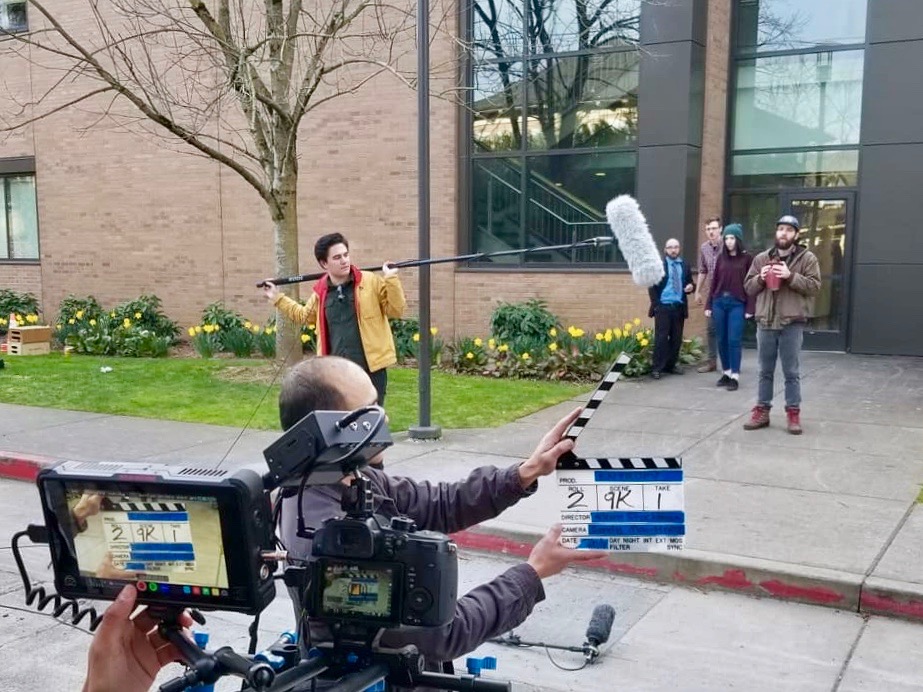
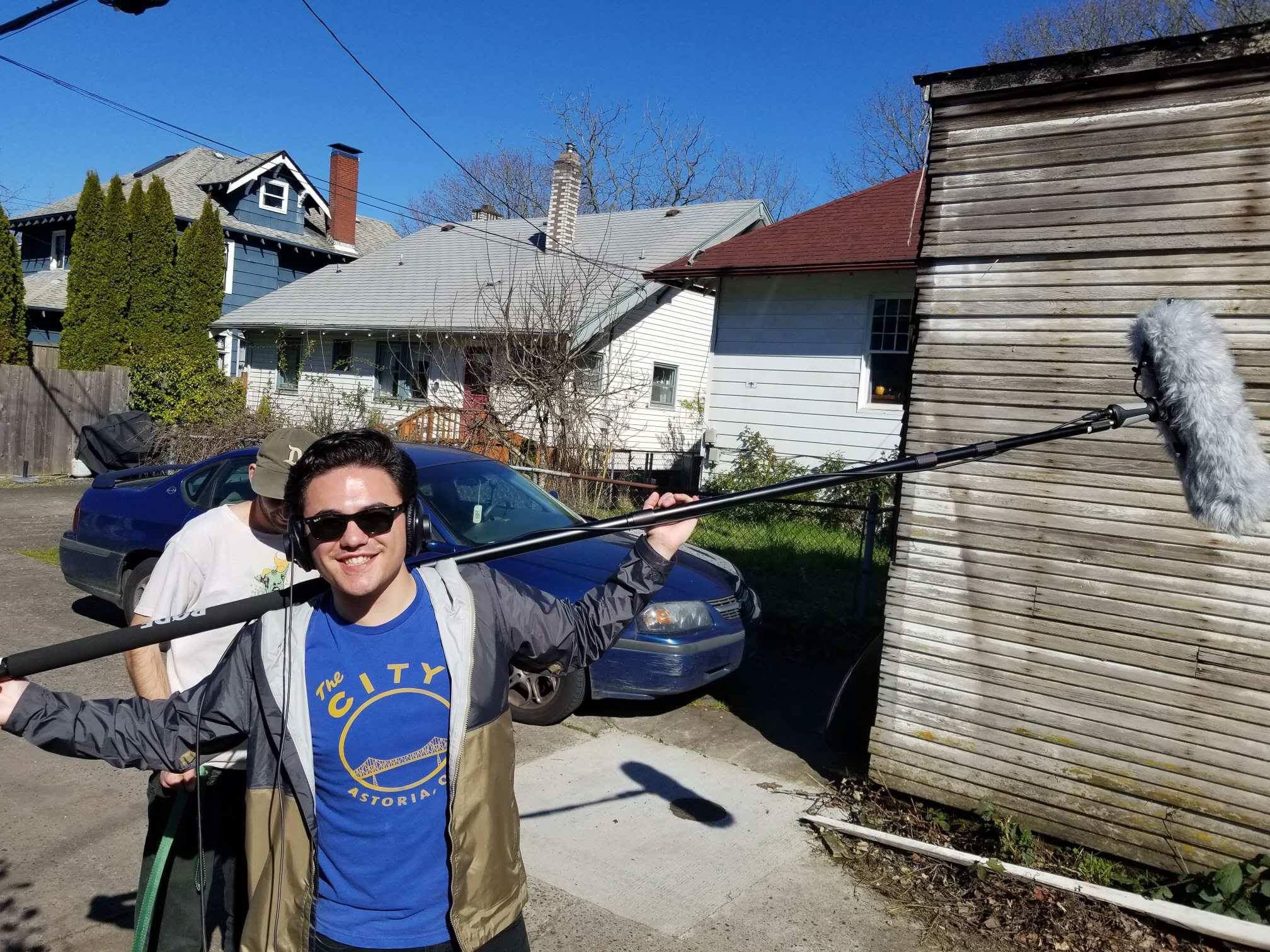
I was a key part of the short film "Entropy," directed by Adam Stockman, bringing experience in boom mic operation, lavaliere dressing, and strategic mic placement. I used the full range of sound recording techniques on this project — boom mic operation, studio editing, ADR, foley, and sound effects.

Color Sensor is a complex marriage of sensors and sound.
The concept came from Parallel Studios as an exploration into new ways of connecting environment and sound. When in use, the device recognizes a color and maps it to a sound: its sensors "read" a color, send it wirelessly to a control computer that maps it to a sound, and the computer sends that information back to the device, which displays the color through its onboard lights.
I designed the device entirely myself, including the industrial design of the chassis and housing, the wiring, the electronics, and the programming.

Heartbeat, created at Parallel Studios, is a concept project exploring the direct connection between a participant and their surroundings. I used custom software, sensors, and audio to connect a participant's pulse directly to a speaker driver, pushing it in and out with every beat.
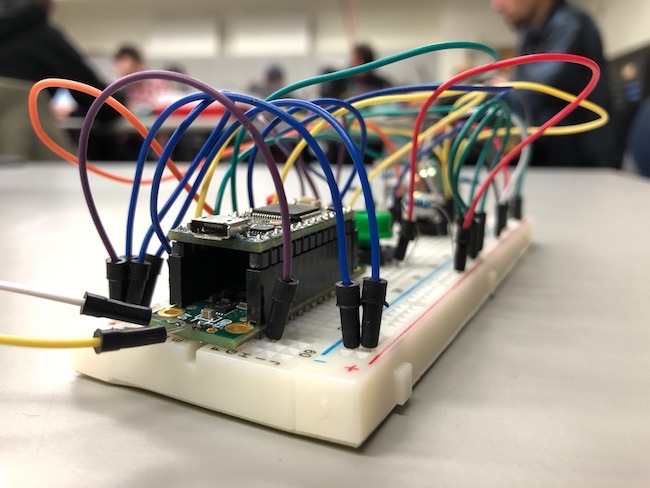
The Environmental Instrument translates data from its surroundings into frequencies. I conceived it when I wanted to create a non-standard notation piece with an element of unpredictability built in. The instrument uses three sensors that each control a separate waveform: a light sensor, a temperature sensor, and a motion sensor. The light sensor controls the most prevalent frequency — more light means higher frequencies, less light means lower ones. The temperature sensor works similarly, raising frequency with heat and lowering it with cold. Pitch, roll, and yaw each control their own frequency as well, moving up or down with the direction of tilt. I read and convert all of this into frequencies using a Teensy 3.2 and the Teensy audio library.